


TDS (Total Dissolved Solids) measures the concentration of dissolved substances in your water. A safe TDS level is between 50 and 300 ppm. Anything above 500 ppm requires treatment. Use a TDS meter to test your water at home, and consider a reverse osmosis filter if your reading is too high.
TDS, or Total Dissolved Solids, is one of the most important numbers that tells you what is actually inside your drinking water.
In this guide, you will learn exactly what TDS measures, what levels are considered safe versus harmful, and what practical steps you can take if your water’s TDS is too high. No jargon, no fluff, just the information you need to make a confident decision about your water.
Read on to find out where your water stands.
What Does TDS Mean in Water?
TDS stands for Total Dissolved Solids. It measures the total concentration of dissolved substances in water, expressed in milligrams per litre (mg/L) or parts per million (ppm).
These dissolved substances fall into two broad categories:
- Minerals and salts (often harmless or beneficial): calcium, magnesium, potassium, and sodium bicarbonate.
- Contaminants (potentially harmful): lead, chlorine by-products, nitrates, fluoride at high concentrations, and industrial chemicals.
A high TDS reading does not automatically mean your water is dangerous. It means your water contains a significant quantity of dissolved material, and the type of dissolved material is what determines whether it is safe.
What Is a Safe TDS Level for Drinking Water?
The World Health Organization (WHO) recommends keeping TDS below 300 mg/L for the best-tasting and safest drinking water. Most international drinking water standards set 500 mg/L as the upper acceptable limit.
Here is a straightforward reference:
| TDS Level (ppm) | Water Quality |
|---|---|
| Below 50 | Low minerals, may taste flat. Ideal for Drinking. |
| 50 to 150 | Excellent for drinking |
| 150 to 300 | Good |
| 300 to 500 | Acceptable, but heavy in minerals |
| 500 to 900 | Poor, treatment recommended |
| Above 900 | Unacceptable for regular consumption |
What Causes High TDS in Water?
Several common sources contribute to elevated TDS in household water:
- Municipal supply pipelines: Aging or corroded pipes made of iron, lead, or galvanised steel leach metals into water as it travels from the source to your tap.
- Groundwater and borewells: Underground aquifers naturally contain high concentrations of calcium, magnesium, and sodium, which dissolve into the water over time.
- Hard water: Areas with naturally hard water consistently produce higher TDS readings due to elevated calcium and magnesium content.
- Industrial and agricultural runoff: Factories, farms, and chemical operations release nitrates, pesticides, and heavy metals into water tables, particularly in areas without strict environmental controls.
- Building storage tanks: Water stored in rooftop or basement tanks can accumulate sediment and biological matter, raising TDS and introducing contaminants that may not be present in the mains supply.
How to Test TDS at Home
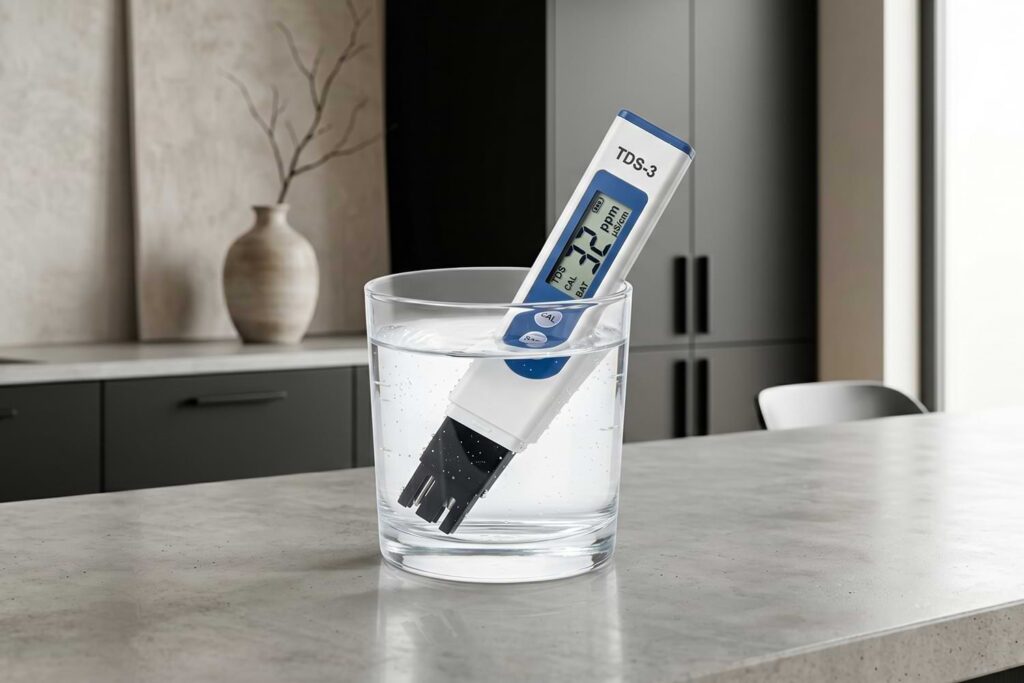
A TDS meter is the simplest and most affordable way to check your water. It works by measuring electrical conductivity, since dissolved salts conduct electricity while pure water does not.
Steps to test:
- Collect a sample of tap water in a clean glass.
- Dip the TDS meter probes 2 to 3 cm into the water.
- Wait 2 min for a stable reading.
- Note the result in ppm or mg/L.
Test at the tap and again after your purifier to see exactly how much your filter is removing.
If you prefer not to buy a separate device, some Kloud Water Filters include a real-time TDS display built into the unit, so you can monitor your filtered water’s TDS level at a glance without any additional equipment.
Does High TDS Always Mean Dangerous Water?
No, but it is a signal worth taking seriously.
High TDS from calcium and magnesium is generally harmless and can support bone and heart health. High TDS from lead, chlorine by-products, or nitrates carries genuine health risks with prolonged exposure.
This is the key limitation of a TDS reading alone: it tells you how much is dissolved, not what. A laboratory water test will identify specific contaminants. It is worth arranging one if your TDS consistently exceeds 500 ppm, your building is older, or your water is stored in a tank before reaching your tap.
What to Do If Your TDS Is Too High
Reverse Osmosis (RO) filtration is the most effective method for reducing TDS. An RO membrane removes up to 99% of dissolved solids, including heavy metals, nitrates, and chemical contaminants.
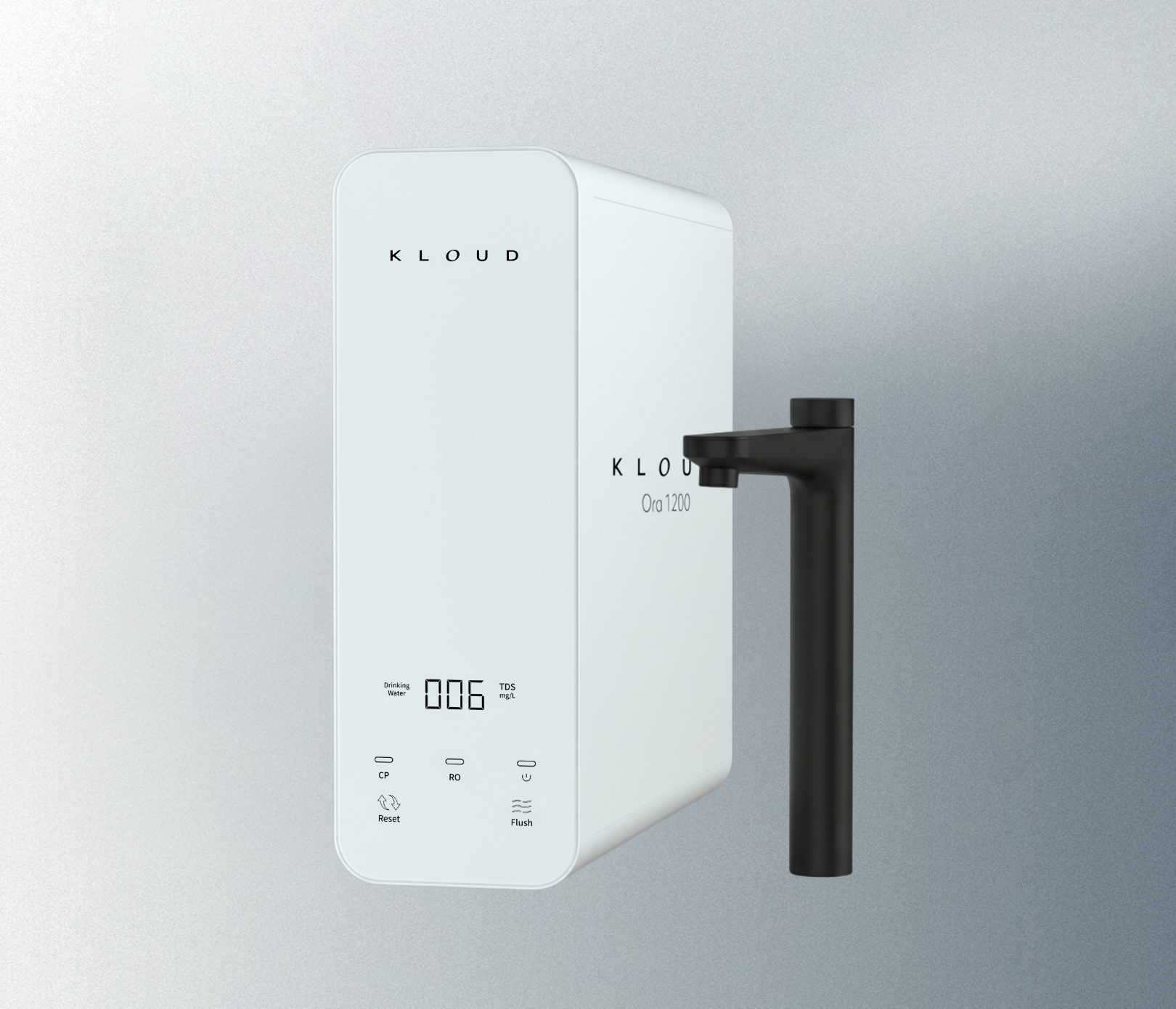
For larger households and offices with higher daily water consumption, the Ora 1200 delivers high-output RO filtration that reduces TDS to the optimal 10-20 ppm range (based on input TDS and region) while a remineralisation stage adds back essential minerals, so your water is clean without tasting flat.
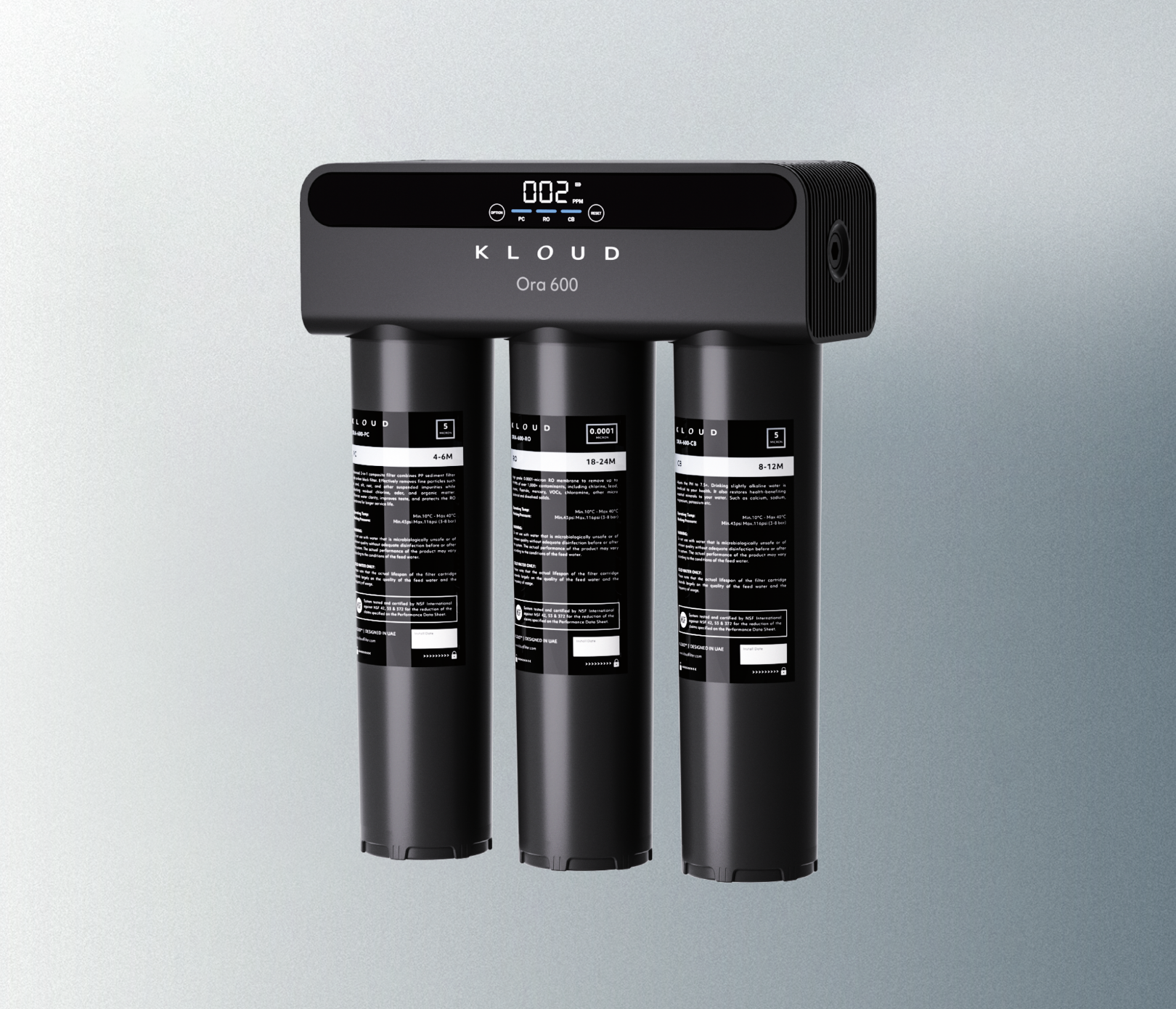
For smaller households where daily consumption is lower, the Kloud Ora 600 offers the same RO filtration quality in a more compact, right-sized system.
Choosing between the Ora 1200 and Ora 600:
Choose the Ora 1200 RO filtration system if you have a larger family, run a small office, or your daily filtered water demand is high.
Choose the Ora 600 RO filtration system if you are outfitting a smaller home or apartment where a high-output system would be more than you need.
Both systems handle elevated TDS effectively. The decision comes down to how much filtered water you go through in a day.
Key Takeaways
TDS measures the total concentration of dissolved solids in your water. The ideal drinking range is 50 to 300 ppm. Common causes of high TDS include aging pipes, hard water, groundwater minerals, and building storage tanks. A TDS meter tells you the level; a lab test tells you what is causing it. The right purifier depends on your TDS reading and your water source.
Testing your water takes two minutes. Knowing your TDS is the first step to making sure every glass your family drinks is genuinely safe.